Active Learning Guide | FParentips – Make Learning Fun at Home
Introduction
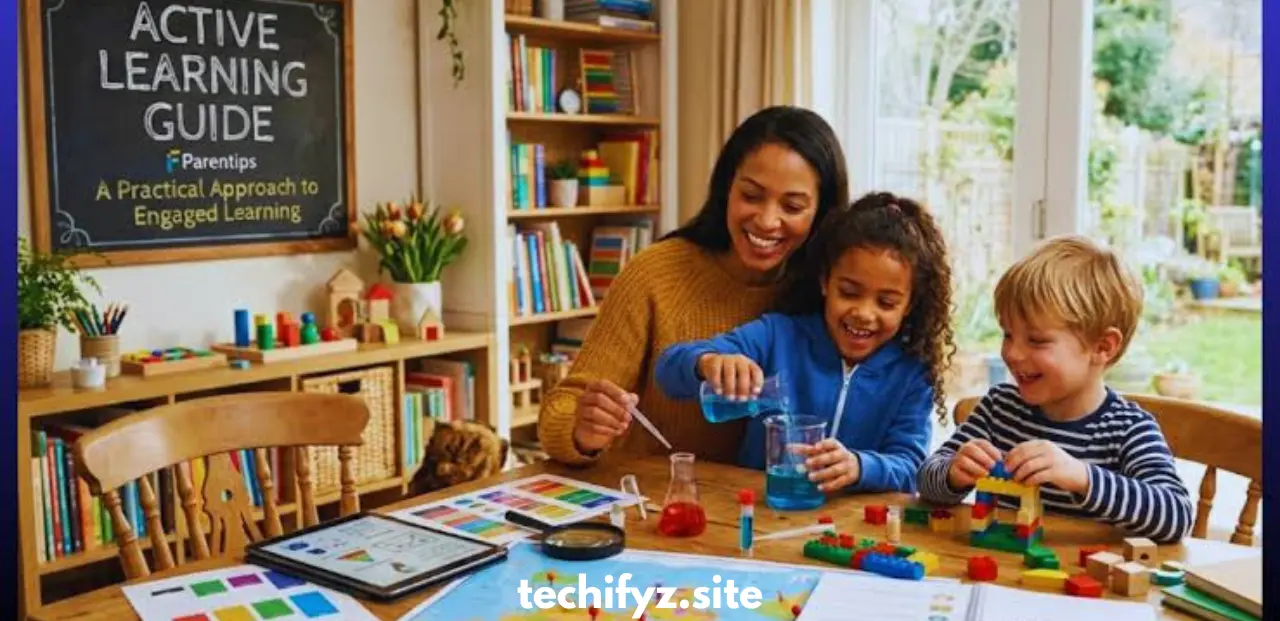
Learning does not always have to feel dull or repetitive. Many times, children are expected to memorize information, fill out worksheets, or sit quietly and listen. While structure has its place, real learning occurs when children participate, explore ideas, and think independently. The Active Learning Guide from FParentips helps parents transform everyday moments into meaningful learning experiences.
This guide supports parents who want their children to understand concepts, create ideas, and solve problems instead of simply repeating facts. It focuses on curiosity, practical activities, reflection, and thoughtful observation of the world around them.
What Is Active Learning?
Active learning is an approach where the child plays the central role in the learning process. Rather than only listening or reading, children take part in activities, explore ideas, ask questions, and solve challenges. They learn through action and reflection, which strengthens memory and builds essential skills.
For instance, measuring ingredients while baking introduces math concepts. Watching plants grow introduces scientific observation. Organizing a small DIY project teaches planning and problem-solving skills.
Why Active Learning Matters
Active learning is not limited to academic improvement. It also helps children develop valuable life abilities:
- Engagement: Children remain curious and interested in what they are doing.
- Critical Thinking: They learn how to analyze situations and discover possible solutions.
- Confidence: Children feel proud when they discover or build something independently.
- Life Skills: Communication, planning, and problem-solving abilities grow naturally.
Core Principles of the FParentips Active Learning Guide
1. Learning by Doing
Children learn more effectively when they participate directly. Hands-on experiences such as building, cooking, experimenting, or creating are often more powerful than traditional worksheets.
2. Ask Questions Instead of Providing Answers
Parents can guide thinking by asking questions rather than giving solutions immediately. Examples include:
- “What do you think might happen?”
- “How could you solve this challenge?”
- “Can you try another approach?”
These types of questions encourage independent thinking and exploration.
3. Turn Everyday Life into a Classroom
Learning opportunities exist in daily activities:
- Kitchen: Fractions, measuring, and step-by-step processes.
- Shopping: Budget planning, comparisons, and decision-making.
- Nature Walks: Observation, investigation, and creativity.
- Household Tasks: Sorting, organizing, and solving small problems.
4. Reflect and Talk About Experiences
After completing activities, encourage children to reflect by asking questions such as:
- “What worked well?”
- “What was difficult?”
- “What could you try differently next time?”
Reflection helps build deeper understanding and awareness.
5. Encourage Teaching Others
When children explain what they have learned to someone else, their knowledge becomes stronger and their confidence increases.
6. Value Curiosity Over Completion
The focus should not be on finishing tasks quickly. Instead, the goal is to explore ideas, ask questions, and enjoy the learning journey.
Applying Active Learning at Home
Kitchen Learning
- Measuring ingredients → understanding fractions and basic math.
- Preparing meals → learning sequencing and following directions.
- Trying different flavors → exploring science and creativity.
Household Chores
- Sorting laundry → recognizing categories and patterns.
- Arranging shelves → developing planning and spatial thinking.
- Scheduling chores → practicing time management and problem-solving.
Games and Play
- Board games → improving strategy and critical thinking.
- Card games → strengthening logic, numbers, and probability.
- Role-playing activities → building social skills, imagination, and communication.
Nature Activities
- Watching plants, insects, or animals → learning biology and observation skills.
- Gathering leaves or stones → understanding classification and patterns.
- Sketching or journaling → encouraging creativity and recording ideas.
Purposeful Technology
- Coding applications → developing problem-solving, logic, and creativity.
- Research for projects → learning how to collect and analyze information.
- DIY tutorials → following instructions while creating new things.
Age-Specific Activities
Toddlers (2–4 years)
- Sensory exploration using sand, water, or clay.
- Sorting toys based on color or size.
- Movement activities for rhythm and coordination.
Preschool (4–6 years)
- Creative storytelling and puppet play.
- Counting games and simple math activities.
- Nature scavenger hunts outdoors.
Early Elementary (7–9 years)
- Basic science experiments.
- Creative writing exercises.
- Using math concepts in everyday situations.
Tweens (10–13 years)
- DIY projects such as building bridges or models.
- Research small topics and present discoveries.
- Coding tasks or creative art projects.
Teens (14+ years)
- Community service or volunteer projects.
- Advanced problem-solving challenges.
- Leadership roles and mentoring younger siblings.
Techniques for Active Learning
- Ask Open-Ended Questions: Motivate children to think deeply instead of immediately giving solutions.
- Hands-On Projects: Encourage learning by building, experimenting, or creating things.
- Game-Based Learning: Develop strategy, reasoning, and teamwork through play.
- Reflection: Use journaling or discussions to help children process what they learned.
- Teach Back: Let children explain ideas to strengthen understanding.
- Intentional Use of Technology: Use interactive tools that support meaningful learning.
Overcoming Challenges
- Time: Include short and focused activities within normal daily routines.
- Frustration: Praise effort and exploration rather than focusing only on outcomes.
- Screens: Select purposeful learning apps instead of passive entertainment.
Benefits of Active Learning
- Deeper understanding of ideas and concepts.
- Stronger critical thinking and problem-solving abilities.
- Greater curiosity and learning motivation.
- Improved communication and teamwork skills.
- Higher confidence in independent learning.
Sample Activities to Try Today
Activity. Age SkillsLearned
| Bake a cake | 5–12 | Fractions, sequencing, planning |
| Budget grocery shopping | 7–14 | Math, planning, comparison |
| Nature journal | 6–12 | Observation, creativity |
| Build a bridge with blocks | 7–13 | Engineering, problem-solving |
| Write and illustrate a story | 6–10 | Writing, communication, creativity |
| Teach a sibling | 8–14 | Reflection, communication, confidence |
Conclusion
The FParentips Active Learning Guide offers more than a list of tasks — it presents a different approach to learning. By encouraging curiosity, practical experiences, reflection, and active participation, parents can help children build lifelong abilities, confidence, and a genuine love for learning. Education can take place anywhere, every day, and it can be enjoyable, useful, and engaging.
Active learning prepares children not only for school but also for life — helping them think critically, create ideas, explore possibilities, and handle challenges successfully. Parents can begin today without needing special tools, simply by encouraging curiosity, offering guidance, and turning everyday experiences into learning opportunities.