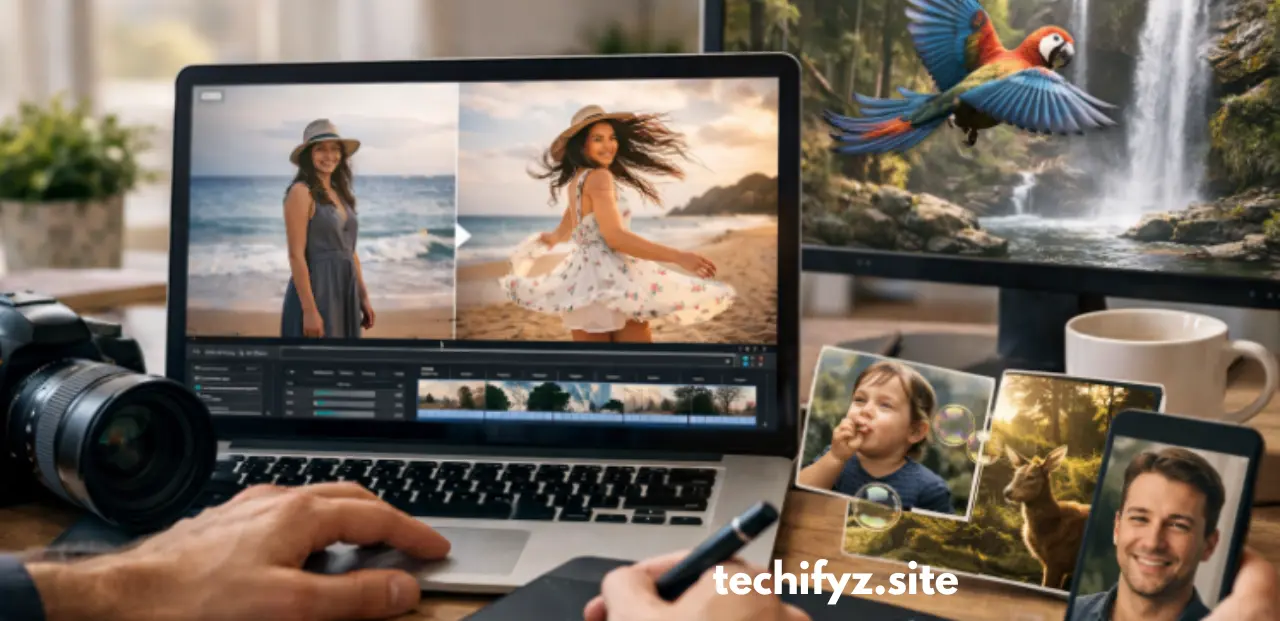
5 AI-Powered Platforms to Convert Still Images into Engaging Videos
Introduction
The way digital content is produced is changing quickly. Static visuals like photographs, product pictures, and illustrations are no longer restricted to being simple images on a page. With the growth of artificial intelligence, these still visuals can now be turned into dynamic and engaging videos in just a few minutes. This transformation is especially useful for marketers, educators, creators, and businesses that want to attract attention in today’s video-focused online landscape.
AI-driven image-to-video platforms rely on advanced automation to animate pictures, apply motion effects, create voiceovers, and merge images into compelling visual stories. Instead of spending long hours editing clips manually, creators can upload images and allow AI to generate polished, professional-style videos automatically.
In this article, we will look at five AI-powered platforms that allow users to convert static images into engaging videos, making visual storytelling quicker and more accessible than ever.
Why Turning Images into Videos Matters
Before exploring the platforms, it is helpful to understand why converting images into videos has become increasingly popular.
1. Greater Engagement
Videos often capture viewers’ attention more effectively than still images. Motion, transitions, and sound elements help make content more interactive and memorable.
2. Faster Content Creation
Artificial intelligence dramatically speeds up the editing process. Rather than building a video scene by scene, creators can automatically generate one directly from their images.
3. Stronger Storytelling
Images represent individual moments, but videos connect those moments together through motion and audio, creating a more complete narrative experience.
4. Perfect for Various Uses
Image-to-video tools are widely used for many different purposes, including:
- Product advertising
- Social media posts
- Marketing presentations
- Educational content
- Personal photo storytelling
Now let’s explore the platforms that make this type of transformation possible.
1. Invideo
Invideo stands out as a versatile solution for converting static images into engaging video content. As a full-featured AI-powered creative suite, it offers far more than simple video creation. The platform allows creators to seamlessly work with images, clips, audio, and music in one environment. This integrated workflow removes the need to switch between separate tools, making content creation faster and more streamlined.
For those looking to animate visuals with ease, invideo acts as a powerful AI image-to-video generator. Users can upload photos or graphics, and the AI adds motion effects, transitions, voiceovers, and background music. Even beginners can produce professional-quality videos without advanced editing experience.
Another benefit is accessibility. Beyond the web-based platform, invideo provides a mobile-friendly AI video app, enabling creators to generate and edit videos directly from their devices. This flexibility makes it simple to produce content on the go while maintaining creative control. Whether for marketing, storytelling, or educational projects, invideo delivers a streamlined approach to turning images into compelling video narratives.
2. Pictory
Pictory is another well-known platform designed to convert visual content into polished video formats. Known for its automation features, it allows users to transform images, scripts, and other media into professional-looking videos with minimal effort.
When working with static visuals, Pictory automatically arranges images into cohesive video sequences. Motion effects, transitions, and captions are applied to enhance the storytelling aspect. Creators do not need extensive editing skills to achieve visually appealing results.
Simplicity is one of Pictory’s key strengths. Its interface guides users step by step, from uploading images to exporting a finished video. AI also organizes scenes, ensuring visuals flow naturally from one moment to the next.
A notable feature is automated voice narration. Pictory can generate voiceovers that match the visuals’ tone and timing. Combined with motion effects and background music, this functionality turns static content into dynamic presentations suitable for marketing, education, or social media storytelling.
3. Runway
Runway is widely recognized for its advanced AI capabilities in creative media. While it offers a broad range of video editing and generation tools, it excels at converting still images into animated sequences.
The platform employs AI-driven motion generation to create movement from static visuals. Rather than just combining images, Runway analyzes visual elements and applies realistic motion effects, giving the impression of depth and life.
For creators exploring artistic storytelling or experimental visuals, Runway provides extensive creative controls. Users can adjust camera movement, animation style, and scene transitions to produce unique, visually striking videos from simple images.
Runway encourages creative experimentation. Its AI can generate cinematic transitions and dynamic effects, enhancing the final video’s immersive quality. Designers, filmmakers, and digital artists can leverage these tools to explore new storytelling techniques starting from static visuals.
4. Kaiber
Kaiber focuses on transforming static images into stylized, animated video experiences. It is especially popular among creators who want to produce visually striking motion content.
Users upload images and guide the AI to create animated sequences around them. Instead of simple slideshows, Kaiber emphasizes dynamic animation and visual transformation, giving videos a cinematic or artistic appearance.
One of Kaiber’s key advantages is creative flexibility. Users can control mood, visual style, and movement direction, allowing images to evolve into fully immersive visual stories.
Kaiber is widely used by musicians, digital artists, and content creators seeking visually expressive videos quickly. By combining still images with AI-generated motion and effects, the platform produces content that is both unique and highly engaging.
5. Luma AI
Luma AI takes a unique approach to turning images into videos by emphasizing spatial depth and realistic motion. Its AI analyzes photographs and generates dynamic visual environments that can then be animated seamlessly.
Instead of merely animating the surface of an image, Luma AI builds depth within the scene. This allows the virtual camera to move naturally through the visual, creating the impression of a three-dimensional space. The outcome is a far more immersive video experience compared to traditional slideshow-style outputs.
This feature is particularly valuable for creators working in photography, architecture, or product visualization. By introducing movement and perspective to still images, Luma AI transforms them into visually engaging presentations.
Another strength of Luma AI is its emphasis on realism. The AI engine strives to maintain the natural look of images while adding motion and cinematic camera effects. This combination of realism and automation makes it a solid choice for creators aiming for high-quality, professional visual storytelling.
Key Features to Consider in Image-to-Video Tools
Although the platforms above are powerful, selecting the right one depends on your creative goals. Essential features to consider include:
AI Motion Generation
The core function is the ability to animate static images convincingly and realistically.
Automated Scene Arrangement
AI should organize visuals into coherent sequences that enhance narrative flow.
Audio and Voice Integration
Adding music, sound effects, or narration increases engagement and emotional impact.
Customization Options
Creative control over transitions, movement, and animation styles allows for unique video outputs.
Ease of Use
A simple, intuitive interface ensures even beginners can create polished, professional videos.
Ideal Applications for Image-to-Video Platforms
AI image-to-video solutions are highly versatile. Common use cases include:
Marketing and Promotions
Companies convert product images into dynamic videos for social media campaigns and advertisements.
Educational Content
Teachers and instructors turn slides, diagrams, and visual explanations into animated instructional videos.
Social Media Creators
Influencers and creators transform photo collections into engaging reels, shorts, or video posts.
Storytelling and Personal Projects
Travel snapshots, event photos, and personal memories can become cinematic video narratives.
Conclusion
Converting static images into compelling videos opens new creative opportunities for individuals and businesses. AI-powered platforms simplify what used to be labor-intensive editing, allowing anyone to produce dynamic video content efficiently.
Platforms like invideo, Pictory, Runway, Kaiber, and Luma AI illustrate how artificial intelligence is revolutionizing visual storytelling. Each platform offers unique tools for animating images, adding motion, and automating video creation.
As video continues to dominate digital communication, turning simple visuals into captivating narratives will only grow in importance. Using AI-driven image-to-video tools, creators can explore fresh ways to bring their ideas, stories, and images to life.