
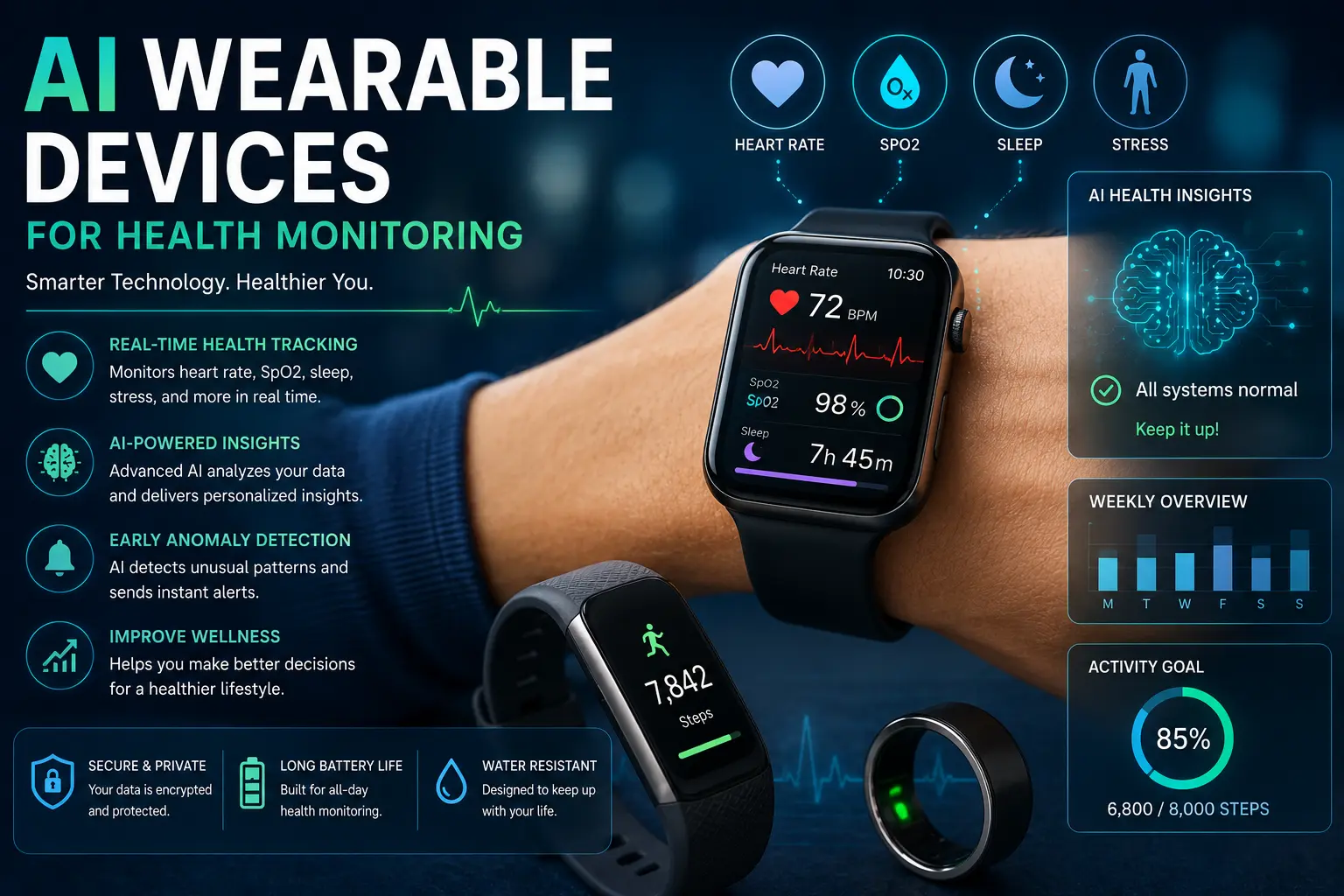
Explore AI wearable devices for health monitoring, including smartwatches, fitness trackers, benefits, challenges, and future healthcare trends.
Introduction
Healthcare technology is undergoing a major transformation, and AI wearable devices for health monitoring are at the center of this revolution. From smartwatches that detect irregular heart rhythms to fitness trackers that analyze sleep quality and stress levels, artificial intelligence is enabling individuals to monitor their health with unprecedented accuracy and convenience.
These intelligent wearables combine advanced sensors, machine learning algorithms, predictive analytics, and real-time data processing to provide personalized health insights. Unlike traditional fitness devices, AI-powered wearables continuously learn from user behavior and physiological data, helping users make informed decisions about their wellness and lifestyle.
As preventive healthcare becomes increasingly important, consumers, healthcare providers, and technology companies are investing heavily in wearable health technologies. This article explores how AI wearable devices work, their benefits, challenges, leading products, industry trends, cybersecurity concerns, and future developments that are shaping the next generation of digital health.
What Are AI Wearable Devices for Health Monitoring?
AI wearable devices for health monitoring are electronic devices worn on the body that use artificial intelligence to collect, analyze, and interpret health-related data.
These devices typically include:
- Smartwatches
- Fitness trackers
- Smart rings
- Biosensors
- Health-monitoring patches
- AI-enabled earbuds
Unlike traditional monitoring tools, AI wearables can identify patterns, detect anomalies, and provide personalized recommendations based on real-time and historical health data.
Core Technologies Behind AI Health Wearables
Several advanced technologies enable modern wearable health devices.
Machine Learning
Machine learning algorithms analyze large volumes of user data to identify trends and generate predictions.
Artificial Intelligence Analytics
AI models transform raw sensor data into meaningful health insights.
Internet of Things (IoT)
Wearables connect with smartphones, cloud platforms, and healthcare systems for continuous data synchronization.
Biosensors
Advanced sensors measure:
- Heart rate
- Blood oxygen levels
- Skin temperature
- Activity levels
- Sleep quality
Edge AI
Many modern devices process health data directly on the device, reducing latency and improving privacy.
Why AI Wearable Health Devices Are Growing Rapidly
The global wearable technology market continues to expand due to increasing health awareness and advancements in artificial intelligence.
Preventive Healthcare Demand
Consumers increasingly seek tools that help identify health issues before they become serious.
Aging Populations
Wearables support elderly individuals through continuous monitoring and early warning systems.
Remote Patient Monitoring
Healthcare providers use wearable data to monitor patients outside clinical settings.
Personalized Wellness
AI enables customized fitness, nutrition, and wellness recommendations.
Healthcare Cost Reduction
Early detection and preventive care can reduce long-term healthcare expenses.
According to industry forecasts, AI-driven health wearables are expected to become one of the fastest-growing sectors within digital healthcare over the next decade.
How AI Wearable Devices Work
AI-powered health wearables follow a multi-step process.
Data Collection
Sensors continuously gather biometric information.
Examples include:
- Heart rate
- Blood pressure estimates
- Oxygen saturation
- Sleep patterns
- Movement activity
Data Processing
The device processes collected data using AI algorithms.
Pattern Recognition
Machine learning models identify trends and anomalies.
Personalized Insights
Users receive recommendations, alerts, and health reports.
Example
A smartwatch may detect:
- Elevated resting heart rate.
- Reduced sleep quality.
- Increased stress indicators.
The AI system can then recommend improved sleep habits, relaxation exercises, or medical consultation if necessary.

Types of AI Wearable Devices for Health Monitoring
AI Smartwatches
Smartwatches are among the most popular wearable health devices.
Leading Examples
- Apple Watch Series
- Samsung Galaxy Watch
- Google Pixel Watch
- Garmin Venu
Health Monitoring Features
- ECG monitoring
- Heart rate tracking
- Blood oxygen measurement
- Fall detection
- Sleep analysis
- Stress tracking
Real-World Applications
Smartwatches help users monitor daily wellness while providing alerts for potential health concerns.
AI Fitness Trackers
Fitness trackers focus on activity and wellness monitoring.
Popular Devices
- Fitbit Charge
- Fitbit Sense
- Garmin VivoSmart
- Xiaomi Smart Band
AI Functions
- Activity tracking
- Calorie estimation
- Exercise recommendations
- Sleep optimization
Benefits
Fitness trackers encourage healthier habits through personalized coaching and progress monitoring.
AI Smart Rings
Smart rings offer powerful health tracking in a compact form factor.
Examples
- Oura Ring
- RingConn
- Ultrahuman Ring
Key Features
- Sleep monitoring
- Heart rate tracking
- Recovery analysis
- Temperature monitoring
Use Cases
Smart rings are ideal for users seeking continuous monitoring without wearing a smartwatch.
AI Medical Wearables
Medical-grade wearables provide advanced monitoring capabilities.
Examples
- Continuous Glucose Monitors (CGMs)
- ECG patches
- Cardiac monitoring devices
Applications
Used for:
- Diabetes management
- Cardiac care
- Chronic disease monitoring
- Remote patient monitoring
AI Smart Earbuds
Emerging wearable devices now integrate health monitoring into earbuds.
Capabilities
- Heart rate tracking
- Activity monitoring
- Voice health analysis
- Stress detection
These devices represent a growing category within digital health innovation.
Key Health Metrics Monitored by AI Wearables
Heart Rate Monitoring
AI continuously analyzes heart rate patterns.
Benefits include:
- Fitness optimization
- Cardiovascular monitoring
- Early anomaly detection
Blood Oxygen Saturation (SpO2)
SpO2 monitoring measures oxygen levels in the bloodstream.
Useful for:
- Respiratory health
- Sleep tracking
- Altitude adaptation
Sleep Analysis
AI evaluates:
- Sleep stages
- Sleep duration
- Sleep quality
- Sleep consistency
Stress Monitoring
Wearables analyze physiological signals to estimate stress levels.
Indicators include:
- Heart rate variability
- Skin temperature
- Activity patterns
Activity Tracking
AI measures:
- Steps
- Calories burned
- Exercise intensity
- Recovery periods
Body Temperature Monitoring
Advanced sensors detect temperature changes that may indicate illness or recovery needs.
Comparison Table of Popular AI Wearable Devices
| Device Type | Primary Purpose | AI Features | Best For |
|---|---|---|---|
| Smartwatch | Health & Productivity | ECG, Sleep Analysis | Everyday Users |
| Fitness Tracker | Activity Monitoring | Coaching Algorithms | Fitness Enthusiasts |
| Smart Ring | Wellness Tracking | Recovery Analytics | Minimalist Users |
| Medical Wearable | Clinical Monitoring | Predictive Health Insights | Patients |
| Smart Earbuds | Emerging Health Tracking | Stress Detection | Active Users |
Real-World Applications of AI Wearable Health Technology
Preventive Healthcare
AI identifies potential health issues before symptoms become severe.
Example
Irregular heart rhythm detection can prompt users to seek medical evaluation early.
Fitness Optimization
Athletes use AI wearables to improve training performance.
Benefits include:
- Recovery monitoring
- Workout planning
- Performance analysis
Chronic Disease Management
Wearables assist patients with ongoing conditions.
Examples include:
- Diabetes monitoring
- Cardiac care
- Hypertension tracking
Remote Patient Monitoring
Healthcare providers can track patient health without requiring frequent office visits.
Corporate Wellness Programs
Organizations increasingly deploy wearables to encourage employee wellness and reduce healthcare costs.
Benefits of AI Wearable Devices for Health Monitoring
Continuous Health Monitoring
Wearables provide real-time tracking throughout the day.
Early Detection of Health Issues
AI can identify abnormal patterns before serious symptoms develop.
Personalized Health Insights
Recommendations are tailored to individual behavior and physiology.
Improved Fitness Performance
Users gain actionable insights for training and recovery.
Better Chronic Disease Management
Patients receive ongoing monitoring outside clinical environments.
Convenience and Accessibility
Health tracking becomes available anytime and anywhere.
Data-Driven Decision Making
Users can make informed lifestyle choices based on objective data.
AI Cybersecurity and Privacy Considerations
Health data is among the most sensitive categories of personal information.
Common Privacy Risks
Data Breaches
Unauthorized access to health records can expose sensitive information.
Cloud Security Vulnerabilities
Many wearables rely on cloud-based platforms for analytics.
Third-Party Data Sharing
Users should understand how companies handle collected health data.
Best Practices for Security
Enable Multi-Factor Authentication
Protect wearable accounts with additional security layers.
Update Firmware Regularly
Software updates often include critical security patches.
Review Privacy Policies
Understand how health data is stored and shared.
Use Trusted Manufacturers
Choose reputable brands with strong security track records.
Challenges and Limitations
Despite their advantages, AI wearable devices face several limitations.
Data Accuracy Concerns
Consumer-grade devices may not always match medical-grade equipment.
Battery Life Constraints
Continuous monitoring can reduce battery longevity.
Cost Barriers
Advanced wearables often carry premium pricing.
Privacy Challenges
Health data collection raises legitimate privacy concerns.
Overreliance on Technology
Users should not replace professional medical advice with wearable insights.
Regulatory Considerations
Health-related AI devices often face strict compliance requirements.
Industry Insights and Market Trends
Several trends are shaping the future of wearable healthcare technology.
Predictive Healthcare
AI is moving beyond monitoring toward predicting future health outcomes.
Healthcare Integration
Wearables increasingly connect directly with healthcare providers.
Advanced Sensor Development
New sensors improve monitoring accuracy and expand measurable metrics.
Personalized Medicine
AI wearables support individualized treatment strategies.
Increased Adoption by Healthcare Systems
Hospitals and clinics increasingly incorporate wearable data into patient care.
Future Trends in AI Wearable Devices for Health Monitoring
Non-Invasive Glucose Monitoring
Researchers are developing AI wearables capable of monitoring glucose without finger-prick testing.
AI-Powered Disease Prediction
Future devices may identify disease risks before symptoms emerge.
Potential areas include:
- Cardiovascular disease
- Diabetes
- Sleep disorders
- Neurological conditions
Digital Twin Technology
AI may create virtual health models that simulate an individual’s physiological state.
Mental Health Monitoring
Future wearables could analyze emotional and psychological well-being more accurately.
Continuous Multi-Metric Monitoring
Next-generation devices will combine numerous health indicators into a unified wellness platform.
Greater Edge AI Adoption
On-device AI processing will improve privacy and reduce cloud dependency.
FAQ
1. What are AI wearable devices for health monitoring?
AI wearable devices are smart technologies that use artificial intelligence and sensors to monitor, analyze, and provide insights about health and wellness.
2. Are AI health wearables accurate?
Many modern wearables offer highly accurate measurements for consumer use, though they should not replace professional medical equipment or diagnosis.
3. Which AI wearable is best for overall health tracking?
Popular options include the Apple Watch, Fitbit Sense, Garmin Venu, Samsung Galaxy Watch, and Oura Ring, depending on individual needs.
4. Can AI wearables detect health problems?
Some devices can identify irregular heart rhythms, sleep disturbances, stress patterns, and other indicators that may warrant medical evaluation.
5. Are wearable health devices secure?
Most reputable devices include strong security measures, but users should enable multi-factor authentication and keep software updated.
6. Can healthcare providers use wearable data?
Yes. Many healthcare systems increasingly incorporate wearable-generated data into patient monitoring and treatment plans.
7. Are AI wearables worth the investment?
For individuals focused on preventive healthcare, fitness improvement, and wellness optimization, AI wearables often provide significant long-term value.
Conclusion
AI wearable devices for health monitoring are transforming personal healthcare by providing continuous, data-driven insights into wellness, fitness, and medical conditions. Through advanced sensors, machine learning, and predictive analytics, these devices empower individuals to take a more proactive role in managing their health.
From smartwatches and fitness trackers to smart rings and medical wearables, AI-powered technologies are improving preventive care, enabling remote patient monitoring, and supporting healthier lifestyles. While challenges related to privacy, accuracy, and cybersecurity remain important considerations, ongoing innovation continues to enhance the capabilities of wearable health technologies.
As healthcare increasingly shifts toward personalized and preventive models, AI wearables are positioned to become essential tools for both consumers and healthcare professionals.
Key Takeaways
- AI wearable devices for health monitoring use AI and advanced sensors to track health metrics in real time.
- Smartwatches, fitness trackers, smart rings, and medical wearables are leading device categories.
- AI enables personalized wellness recommendations and predictive health insights.
- Wearables support preventive healthcare and early detection of potential issues.
- Remote patient monitoring is becoming a major healthcare application.
- Data privacy and cybersecurity remain critical concerns.
- Advanced sensors continue to improve monitoring accuracy.
- Future devices may enable non-invasive glucose monitoring and disease prediction.
- Healthcare providers increasingly use wearable data to support patient care.
- AI wearables are becoming a cornerstone of modern digital health ecosystems.
