
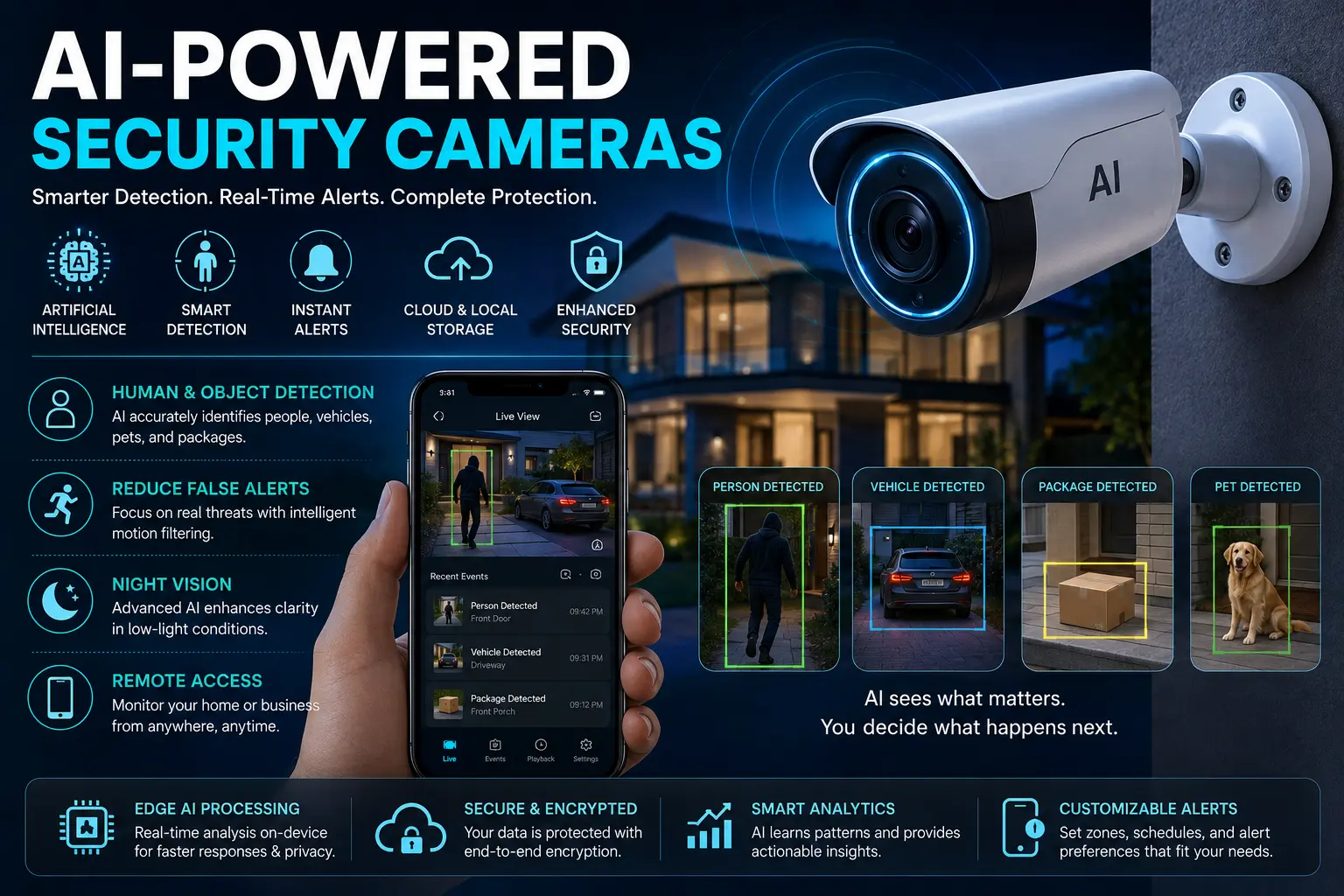
Discover AI-powered security cameras, their features, benefits, cybersecurity risks, use cases, and future trends in smart surveillance technology.
Introduction
Security technology has evolved dramatically over the past decade, moving far beyond traditional CCTV systems that simply recorded footage. Today, AI-powered security cameras are transforming home and business surveillance through intelligent monitoring, real-time threat detection, facial recognition, object classification, and predictive analytics.
Unlike conventional cameras that require constant human observation, AI-enabled surveillance systems can analyze video feeds automatically, identify unusual behavior, distinguish between people and objects, and send instant alerts when potential threats are detected. These advancements have made security systems more efficient, proactive, and reliable than ever before.
As artificial intelligence becomes increasingly integrated into smart homes, commercial buildings, and public infrastructure, smart home AI and intelligent security technologies are becoming essential components of modern safety strategies.
This comprehensive guide explores how AI-powered security cameras work, their benefits, real-world applications, cybersecurity implications, challenges, and future innovations shaping the next generation of intelligent surveillance.
What Are AI-Powered Security Cameras?
AI-powered security cameras are surveillance devices that use artificial intelligence technologies such as machine learning, computer vision, deep learning, and behavioral analytics to analyze video footage in real time.
Unlike traditional cameras that merely record events, AI security cameras can:
- Detect people, vehicles, and animals
- Recognize faces
- Identify suspicious behavior
- Send intelligent alerts
- Reduce false alarms
- Track movement patterns
- Automate monitoring tasks
These capabilities allow security systems to respond faster and provide more actionable information.
Core Technologies Behind AI Security Cameras
Several advanced technologies power modern surveillance systems.
Computer Vision
Computer vision enables cameras to understand visual information.
Examples include:
- Facial recognition
- Object detection
- Motion analysis
- License plate recognition
Machine Learning
Machine learning algorithms continuously improve detection accuracy based on collected data.
Deep Learning
Deep learning models process complex visual patterns and identify subtle differences between objects and behaviors.
Edge AI
Many modern cameras process data directly on the device rather than sending everything to the cloud.
Benefits include:
- Faster detection
- Improved privacy
- Reduced bandwidth usage
Behavioral Analytics
AI can recognize unusual activities and alert users when abnormal patterns occur.
Why AI-Powered Security Cameras Are Growing in Popularity
Several factors are driving rapid adoption across residential and commercial markets.
Increasing Security Concerns
Homeowners and businesses seek more effective ways to prevent theft and unauthorized access.
Smart Home Adoption
The growth of smart home AI ecosystems has increased demand for intelligent surveillance.
Reduced Monitoring Costs
AI automates many surveillance tasks previously requiring human operators.
Improved Accuracy
Modern AI significantly reduces false alarms compared to traditional motion-detection systems.
Remote Monitoring
Users can monitor properties from anywhere through smartphones and cloud platforms.
Industry analysts project continued growth in the AI surveillance market as organizations invest in smarter security solutions.
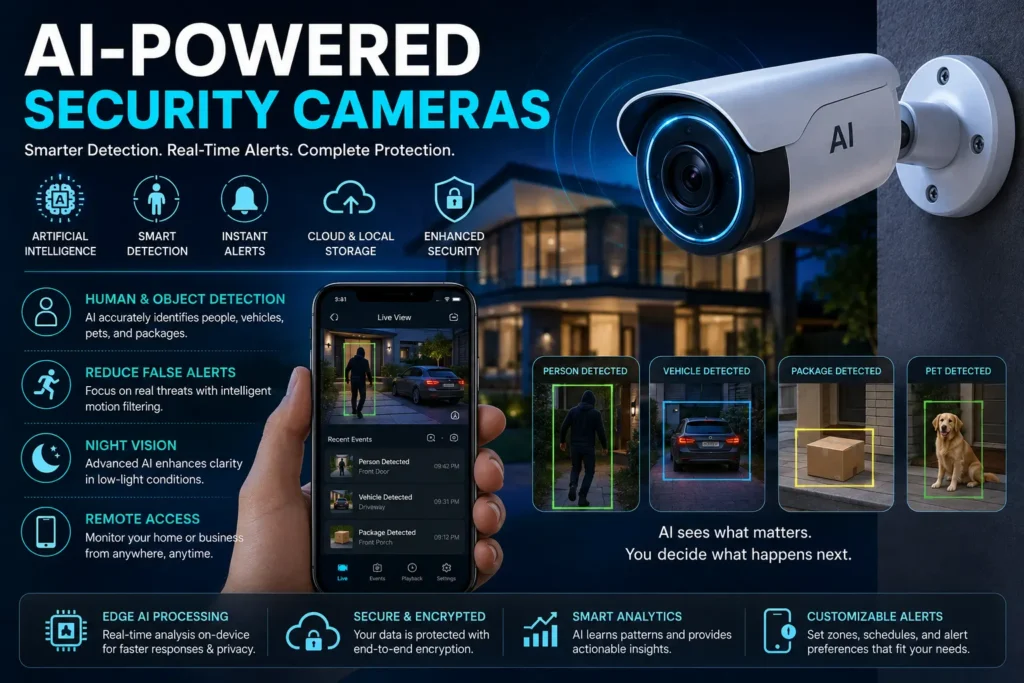
How AI-Powered Security Cameras Work
AI security cameras follow a sophisticated monitoring process.
Video Capture
High-definition cameras continuously record visual information.
Data Processing
AI algorithms analyze footage in real time.
Object Recognition
The system identifies:
- People
- Vehicles
- Pets
- Packages
- Animals
Event Classification
The AI determines whether activity is normal or potentially suspicious.
Alert Generation
When specific conditions are met, notifications are sent to users.
Example Workflow
- A person approaches the front door.
- The camera detects human presence.
- AI identifies the individual as unfamiliar.
- A smartphone alert is triggered.
- Live footage becomes available for review.
This process allows users to react immediately to potential security concerns.
Key Features of AI-Powered Security Cameras
Facial Recognition
Facial recognition technology identifies known and unknown individuals.
Applications
- Home access monitoring
- Employee verification
- Visitor tracking
Benefits
Users can receive different alerts depending on who is detected.
Smart Motion Detection
AI distinguishes meaningful movement from environmental changes.
Traditional Motion Detection
May trigger alerts for:
- Wind
- Rain
- Shadows
- Moving trees
AI Motion Detection
Focuses on:
- Human movement
- Vehicles
- Specific objects
This greatly reduces false notifications.
Object Recognition
AI cameras classify objects with remarkable accuracy.
Detectable Objects
- People
- Cars
- Bicycles
- Animals
- Packages
This capability enables more targeted monitoring.
License Plate Recognition
Advanced systems can identify vehicle license plates.
Common Uses
- Parking management
- Commercial security
- Gated communities
Intrusion Detection
AI can detect unauthorized entry into restricted areas.
Examples
- After-hours access
- Fence breaches
- Perimeter violations
Night Vision Enhancement
AI improves low-light image quality through intelligent processing.
This enables more accurate monitoring during nighttime conditions.
Types of AI-Powered Security Cameras
Indoor Security Cameras
Designed for interior monitoring.
Common Uses
- Child monitoring
- Elder care
- Pet observation
- Intruder detection
Popular Examples
- Google Nest Cam Indoor
- Arlo Essential Indoor
- Eufy Indoor Cam
Outdoor Security Cameras
Built to withstand environmental conditions.
Features
- Weather resistance
- Night vision
- Wide-angle coverage
Applications
- Home security
- Parking lots
- Commercial properties
Video Doorbells
AI-enabled doorbells combine communication and surveillance.
Examples
- Ring Video Doorbell
- Google Nest Doorbell
Features
- Visitor identification
- Package detection
- Two-way communication
Commercial AI Surveillance Systems
Large-scale systems support businesses and public infrastructure.
Capabilities
- Crowd analysis
- Employee monitoring
- Access control
- Behavioral analytics
Comparison Table of AI-Powered Security Camera Types
| Camera Type | Best For | AI Features | Key Benefit |
|---|---|---|---|
| Indoor Camera | Home Monitoring | Motion Detection | Family Safety |
| Outdoor Camera | Property Protection | Object Recognition | Perimeter Security |
| Video Doorbell | Entry Monitoring | Visitor Detection | Convenience |
| Commercial System | Business Security | Behavioral Analytics | Comprehensive Protection |
| PTZ AI Camera | Large Areas | Auto Tracking | Enhanced Coverage |
Real-World Applications of AI Security Cameras
Residential Security
Homeowners use AI cameras to monitor:
- Front doors
- Garages
- Driveways
- Backyards
Benefits
- Theft prevention
- Package protection
- Visitor monitoring
Retail Security
Retailers use AI surveillance to reduce losses.
Applications include:
- Shoplifting detection
- Customer traffic analysis
- Employee safety
Corporate Security
Businesses monitor facilities using intelligent surveillance systems.
Examples include:
- Access management
- Unauthorized entry detection
- Workplace safety monitoring
Smart Cities
Municipal governments deploy AI surveillance for:
- Traffic management
- Public safety
- Emergency response
Healthcare Facilities
Hospitals use AI cameras to improve patient safety and operational efficiency.
Benefits of AI-Powered Security Cameras
Reduced False Alarms
AI distinguishes genuine threats from harmless activity.
Faster Threat Detection
Real-time analytics enable immediate responses.
Enhanced Security Coverage
Automated monitoring operates continuously.
Improved Situational Awareness
Users receive detailed alerts and contextual information.
Cost Savings
AI reduces reliance on manual surveillance monitoring.
Better Evidence Collection
Intelligent recording improves event documentation.
Remote Accessibility
Users can monitor properties from anywhere.
AI Cybersecurity Considerations
As connected devices, AI security cameras face cybersecurity challenges.
Common Security Risks
Unauthorized Access
Weak authentication may allow hackers to access camera feeds.
Data Breaches
Stored footage can become a target for cybercriminals.
Cloud Vulnerabilities
Cloud-based surveillance systems may face security threats if poorly configured.
Device Hijacking
Compromised cameras can be incorporated into botnets or malicious networks.
Security Best Practices
Enable Multi-Factor Authentication
Add an extra layer of account protection.
Update Firmware Regularly
Manufacturers frequently release security updates.
Use Strong Passwords
Avoid default credentials.
Secure Network Infrastructure
Implement:
- WPA3 encryption
- Secure routers
- Separate IoT networks
Choose Trusted Vendors
Select providers with strong cybersecurity reputations and transparent privacy practices.
Industry Insights and Market Trends
Several key trends are shaping the AI surveillance industry.
Edge AI Growth
Processing footage directly on devices reduces latency and improves privacy.
Increased Facial Recognition Adoption
Facial recognition is becoming more accurate and widely deployed.
Smart Home Integration
Security cameras increasingly integrate with:
- Smart locks
- Smart lighting
- Voice assistants
- Alarm systems
AI-Driven Predictive Security
Future systems may identify threats before incidents occur.
Cloud and Hybrid Storage
Organizations increasingly adopt hybrid storage strategies that combine local and cloud-based recording.
Challenges and Limitations
Despite their advantages, AI-powered security cameras face several challenges.
Privacy Concerns
Surveillance technologies raise questions regarding:
- Data collection
- Facial recognition
- User consent
Regulatory Compliance
Different regions impose varying surveillance regulations.
False Positives
Although improved, AI systems can still occasionally misclassify events.
High Initial Costs
Advanced AI-enabled systems often cost more than traditional cameras.
Dependence on Connectivity
Some features require reliable internet access.
Ethical Considerations
The use of facial recognition and behavioral analytics remains a subject of ongoing debate.
Future Trends in AI-Powered Security Cameras
Predictive Threat Detection
Future systems will analyze patterns to predict security risks before they occur.
Advanced Behavioral Analysis
AI will better recognize suspicious activities and emerging threats.
Improved Facial Recognition
Recognition accuracy will continue improving under challenging conditions.
Autonomous Security Systems
AI cameras may coordinate with:
- Drones
- Robots
- Smart locks
- Emergency systems
to create comprehensive security ecosystems.
Enhanced Privacy Technologies
Future solutions will incorporate privacy-preserving AI techniques that minimize unnecessary data collection.
Generative AI Integration
Generative AI may improve security investigations by automatically summarizing incidents and generating reports.
FAQ
1. What are AI-powered security cameras?
AI-powered security cameras use artificial intelligence to analyze video footage, recognize objects, identify threats, and automate surveillance tasks.
2. How are AI security cameras different from traditional cameras?
Traditional cameras record footage, while AI cameras actively interpret video content and provide intelligent alerts and insights.
3. Are AI-powered security cameras accurate?
Modern systems are highly accurate, especially in identifying people, vehicles, and objects, though occasional errors can still occur.
4. Can AI cameras work without internet access?
Many cameras can perform basic local functions offline, especially Edge AI models, but cloud features often require connectivity.
5. Are AI security cameras safe from hackers?
No system is completely immune. However, strong passwords, firmware updates, multi-factor authentication, and secure networks significantly improve security.
6. Do AI cameras protect privacy?
Many manufacturers offer privacy controls, local storage options, and data encryption, but users should review privacy settings carefully.
7. Are AI-powered security cameras worth the investment?
For homeowners and businesses seeking enhanced security, reduced false alarms, and intelligent monitoring, AI security cameras often provide substantial value.
Conclusion
AI-powered security cameras are revolutionizing modern surveillance by transforming passive monitoring systems into intelligent security platforms. Through computer vision, machine learning, facial recognition, and behavioral analytics, these devices deliver greater accuracy, faster threat detection, and more proactive protection than traditional cameras.
From residential properties and retail stores to corporate campuses and smart cities, AI surveillance technologies are helping organizations and individuals enhance safety while improving operational efficiency. Although challenges such as privacy concerns, cybersecurity risks, and regulatory requirements remain important considerations, ongoing innovation continues to improve both performance and trustworthiness.
As AI technology advances, security cameras will become increasingly predictive, autonomous, and integrated into broader smart ecosystems, making them a cornerstone of future security strategies.
Key Takeaways
- AI-powered security cameras use AI, machine learning, and computer vision to provide intelligent surveillance.
- AI significantly reduces false alarms compared to traditional motion-detection systems.
- Key features include facial recognition, object detection, intrusion alerts, and behavioral analytics.
- Smart home AI ecosystems increasingly integrate security cameras with other connected devices.
- Businesses use AI surveillance for access control, safety monitoring, and loss prevention.
- Cybersecurity practices are essential for protecting connected camera systems.
- Edge AI improves privacy and reduces cloud dependence.
- Privacy regulations and ethical considerations continue to shape industry development.
- Predictive threat detection is emerging as a major innovation area.
- AI security cameras are becoming essential tools for modern home and business security.
